SIGHTLINEConcept · not yet worn

Belt to arm to chest. One twist.

Sightline is a dock for your pump and a mount for each place you wear it. Twist it off your belt, snap it onto an arm or chest band for the ride, twist it back after. No adhesive, nothing stuck to your skin.

Watch it move

Illustration generated from the engineering model. Not footage of a prototype.

Twist off. Snap on.

A mount stays in each place you wear it. A quarter turn frees the pump from one and locks it onto the next. It runs on its own until you tap a place.

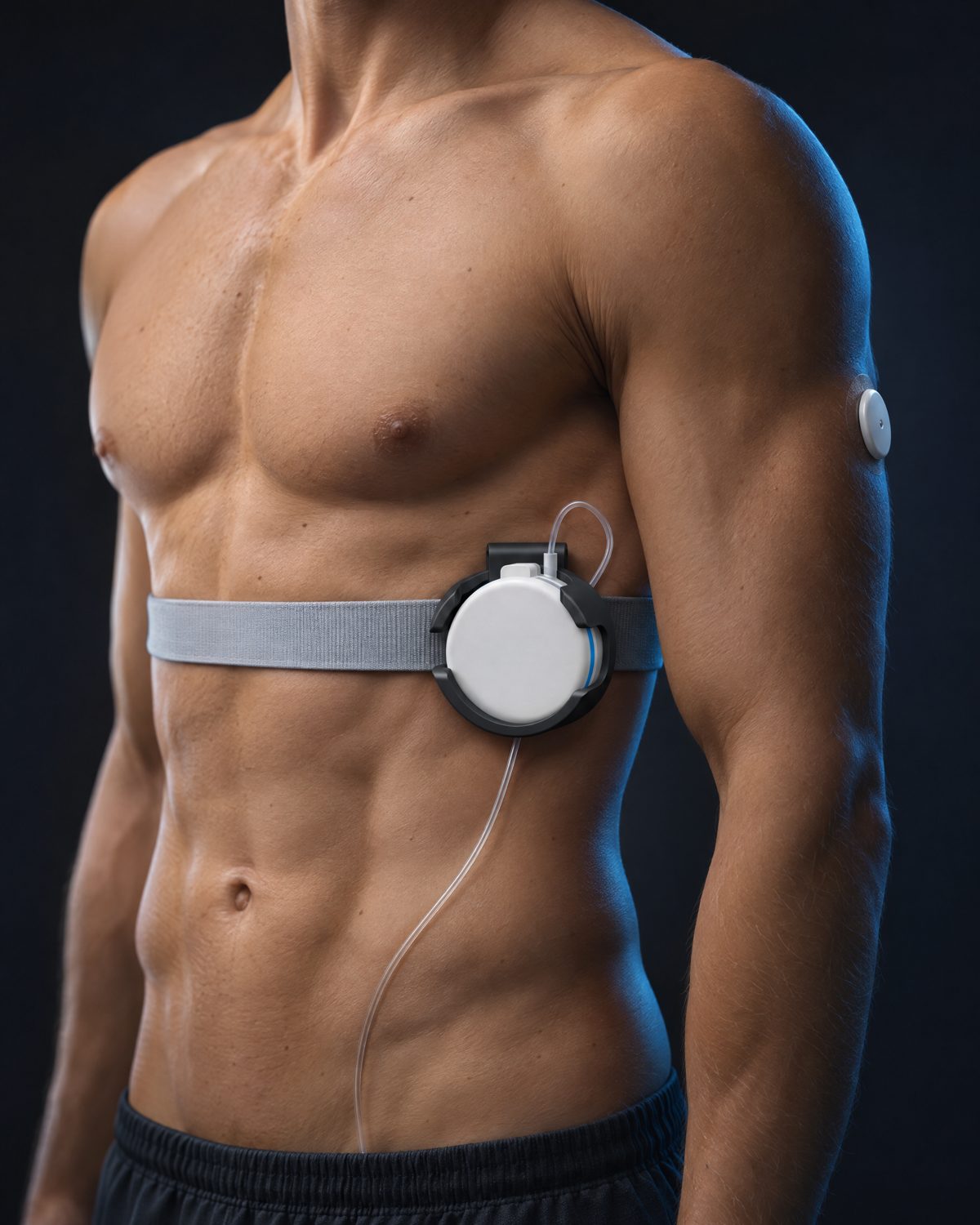
A grey mannequin wearing the dock and pump on a chest strap under the left arm, below a round sensor on the upper arm

The four lugs are the standard. Anything that carries them becomes a mount: a patch sewn into a sports bra or pyjama top, or a running belt. None of those is designed yet.

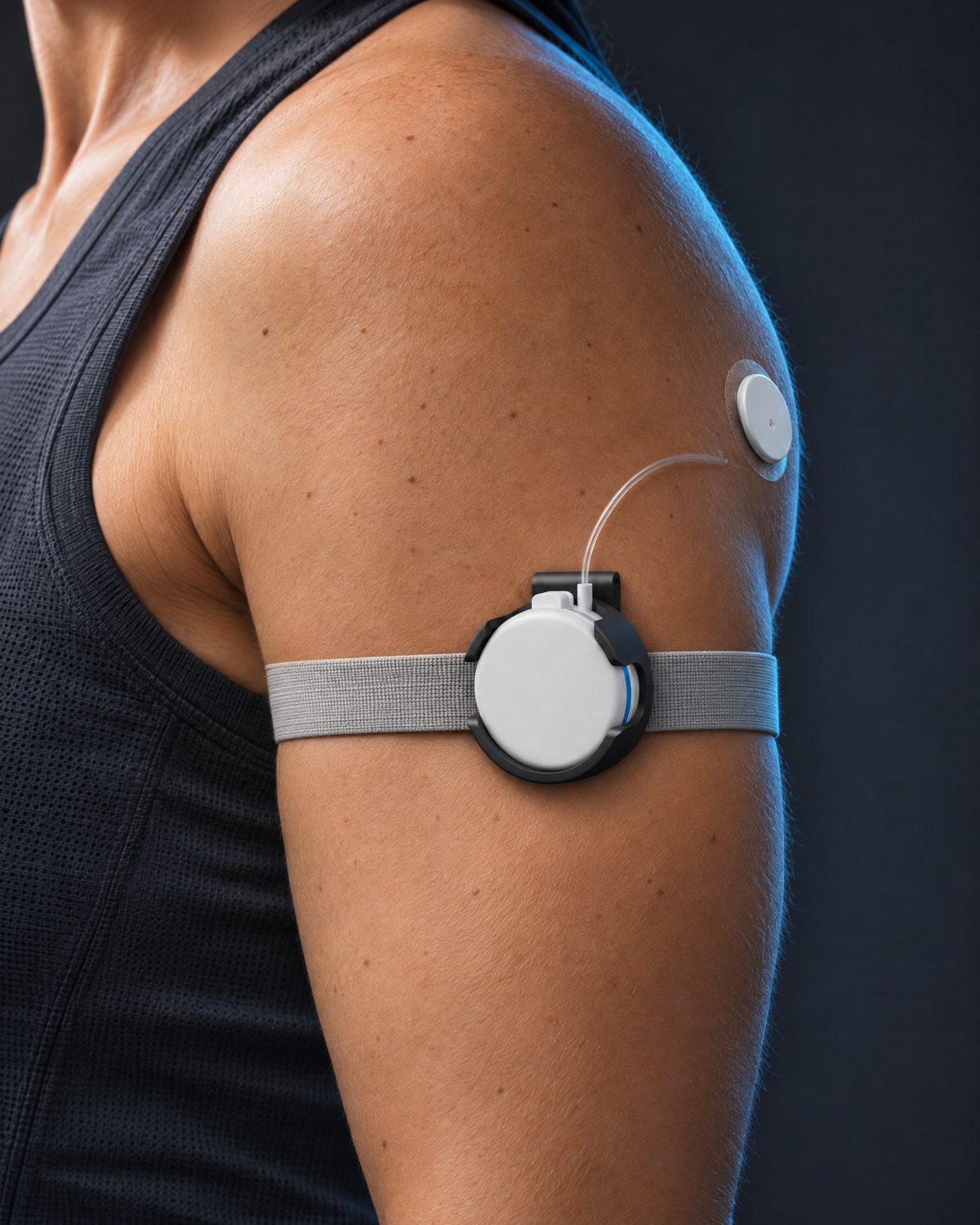
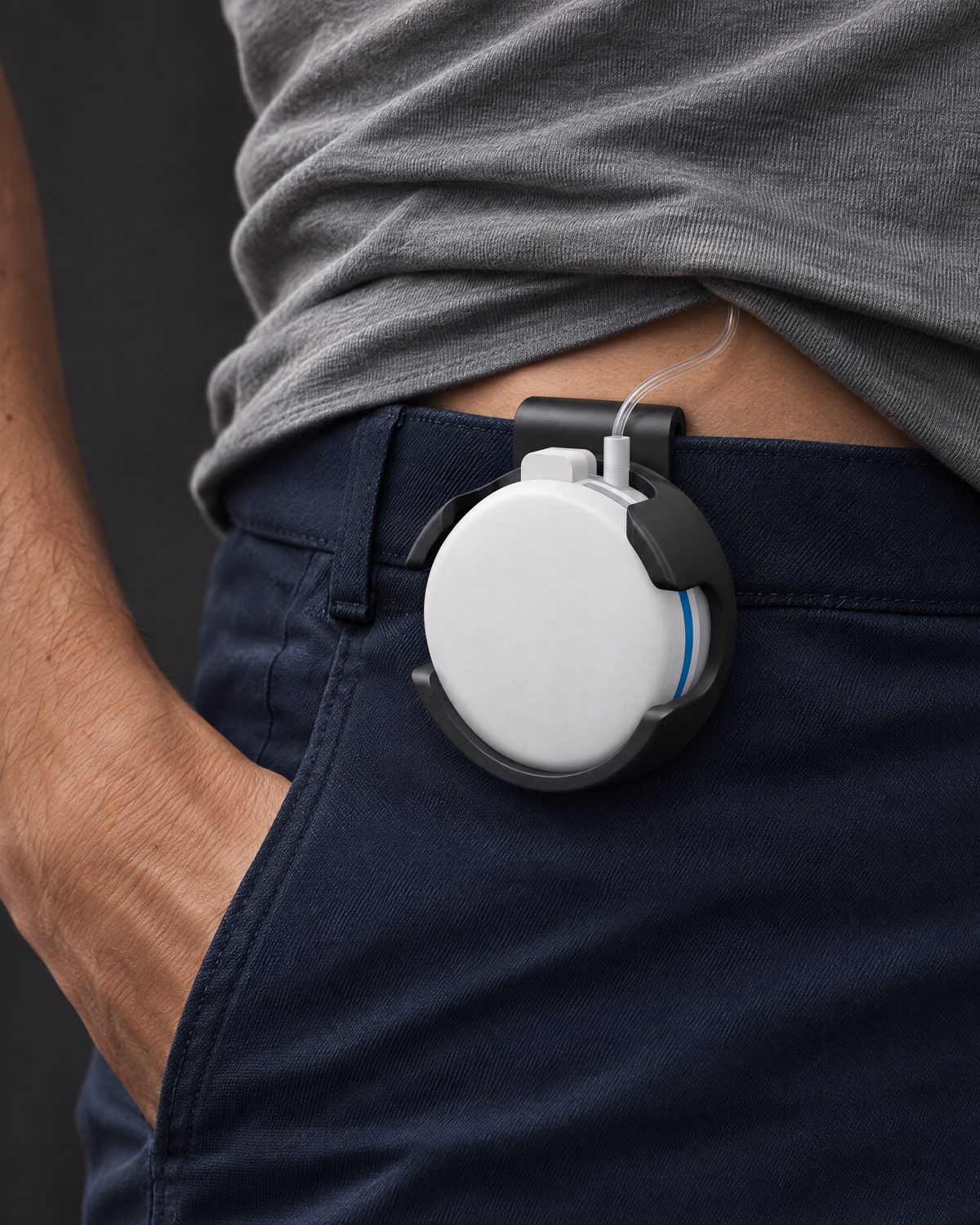
On the body.

Illustrations generated from the engineering model. They are not photographs of a prototype.

The body is in the way.

A glucose sensor on the arm reports to the pump over 2.4 GHz Bluetooth. That signal passes through fabric and is absorbed by tissue. Carried in a pocket, the pump sits behind the hip and thigh, and readings drop out. With no reading, automated dosing has nothing to act on.

The pump's own guide gives the rule: same side of the body, unobstructed, logo facing out. Sightline is that rule turned into hardware.

In a pocket: through the body On Sightline: open air

What a clip, a pouch and a patch don't do.

It moves with you.

Twist the pump off your belt and onto an arm or chest band in one motion, with one hand. Each mount stays where you left it, so there is nothing to re-thread or re-fit.

Nothing sticks to your skin.

Wearing a pump on the body today means an adhesive patch. Sightline uses fabric bands. After a ride or a run the band comes off like a watch strap: nothing to peel, no residue to clean off.

It goes on your chest and your arm.

A belt clip only reaches a belt. A band puts the pump on your ribs or your upper arm, clear of a saddle, a harness or a waistband, and on the same side as the sensor.

The face stays out and the button stays free.

A pouch hides the pump and its button. The dock grips the rim only, so the face, the button and the tubing are in the open in every position.

Against what exists today.

Belt clipAdhesive caseSightline
Where it goesA belt or the edge of clothingWherever the patch is stuckBelt, arm band, chest band
Moving itUnclip, re-clipPeel off; patches are a consumableQuarter turn. Mounts stay put
On your skinNothingAn adhesive patchNothing. A fabric band
After a ride or a runStays on the beltPeel the patch off your skinTwist off. Slip the band off
Track recordShips with the pumpOn sale from third partiesConcept, not yet tested

We searched for a twist-lock dock for a tubed pump, and for an arm or chest band made for this one, and found neither. A search is not proof. A design and patent search is one of the gates below.

The Sightline dock holding a round insulin pump on its waistband clip
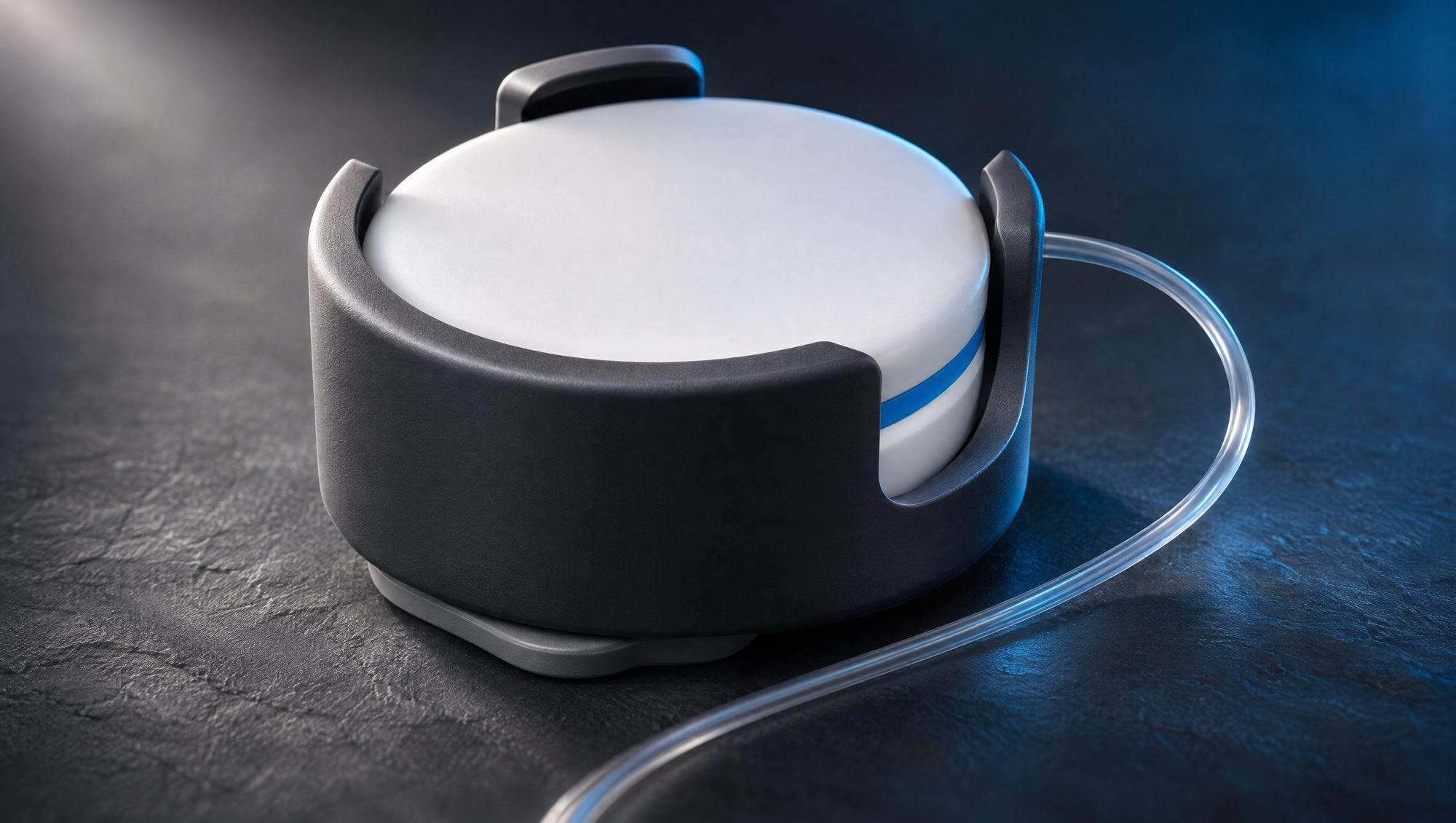
Pump59 × 55 × 17 mm, 50 g
DockOpen face, snap fit
MountClip or band mount

How it goes together.

Scroll through one cycle: apart, locked, seated, worn.

Three parts.
No magnets.

The pump maker warns that magnetic fields trigger false alarms. Everything here holds mechanically.

Forty-four degrees.

Four lugs drop through keyed slots. A short turn puts them under solid material and a sprung latch closes behind.

Press to seat.

Two fingers close over the rim. The face stays open, and the latch below can no longer be reached.

Sensor side.
Face out.

Clipped over a waistband or on a strap, with the tubing leaving toward the infusion site.

Turn00.0° Lift00.0 mm StateOPEN

Take it apart.

Slide to pull the pieces apart. Drag sideways to turn it. Pick a piece to see it alone.

The mount pulled apart: pump, dock, waistband clip and band mount in a vertical stack

Every number is from the CAD.

28.7mm

Waistband to pump face. The pump alone is 17.

44°

Turn from insert to locked, ended by a hard stop.

4

Lugs carrying the load, each overlapping 3.7 mm.

0

Magnets, screws or metal parts.

4

Orientations, so tubing exits toward the site.

21mm

Bend radius on the hub that takes up tubing slack.

3

Cut-outs: button access both sides, tubing at the top.

2

Mounts today. Waistband clip and curved band mount.

Proven on screen. Not yet on a body.

The geometry is finished and checks out in simulation. No part has been printed, fitted to a pump, or worn. The open items are the ones that decide whether this is a product.

Parts are valid, printable solidsVerified

All four pass CAD and print-readiness checks.

Pump envelope fits the dockVerified in CAD

Zero overlap against the published 59 × 55 × 17 mm size.

Lock inserts, turns, stops, latchesVerified in CAD

Clear when inserted and locked; collides only at the stop and latch.

Fit on a real pumpOpen

Rim profile and button position are taken from the guide's drawings.

Snap fingers and latch enduranceOpen

Estimated strain 1.4% and 0.7%. Needs print and pull tests.

Fewer dropped readings than pocket carryOpen

The core claim. Needs a paired wear trial.

Advantage over the supplied belt clipOpen

The supplied clip already allows hip wear. The case rests on band mounting: arm and chest.

Four gates to a decision.

Fit

Caliper the pump. Print the outline gauge, then the dock. Pass when the pump seats and every control is reachable.

Hold

Pull and drop tests in nylon. Pass when a snagged tube releases the pump before it loads the infusion site.

Signal

Paired wear trial: pocket, supplied clip, Sightline on a chest band. Count signal-loss alerts in each.

Clearance

Regulatory read on accessory status, manufacturer guidance on tubing slack, and a trademark and design search.